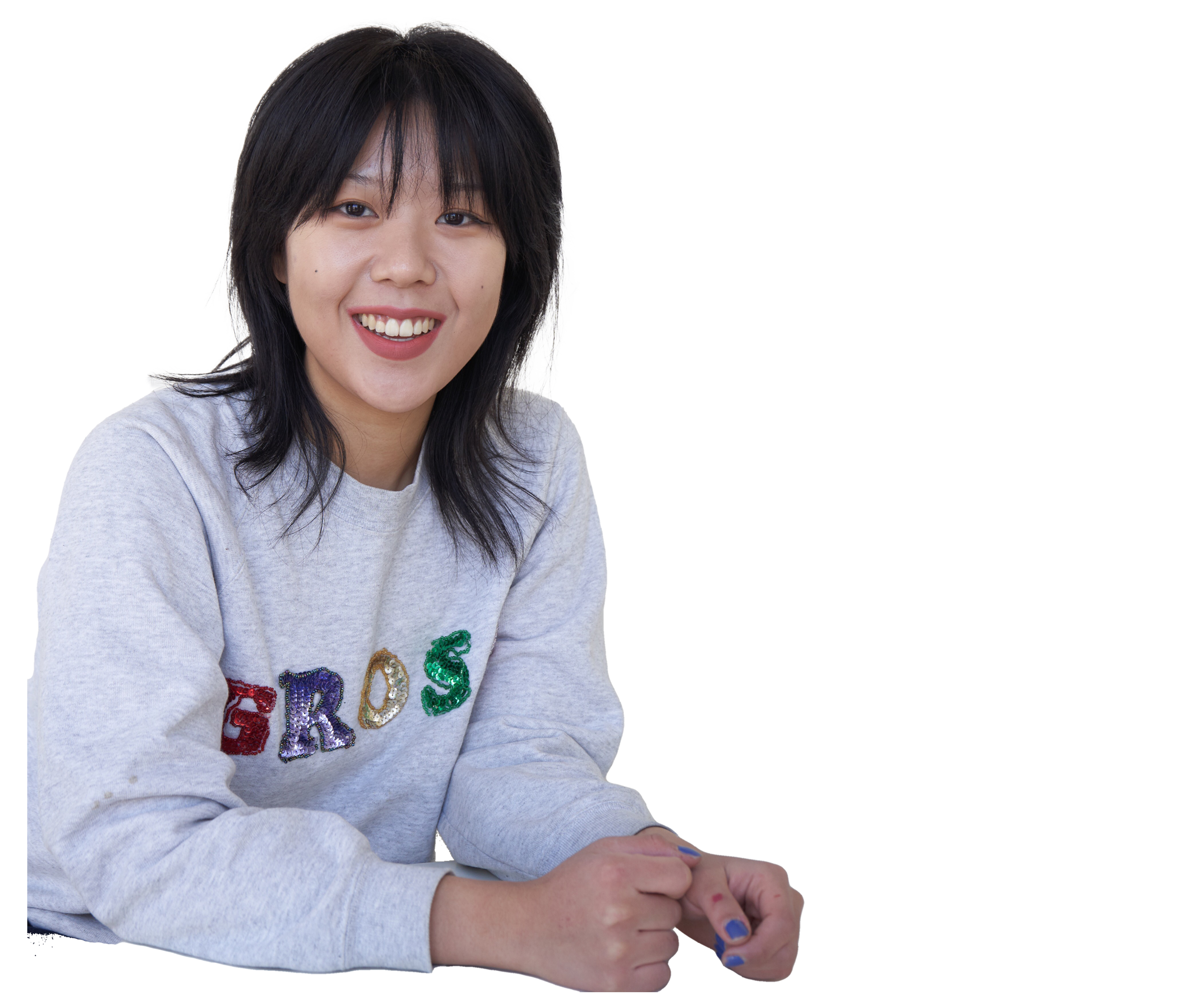
강류의 흙세계
유연함(말랑흙/물)과 힘(불을 견디는/도자의 견고함) 그리고 자연(형태/재료의 원천) 이 세 가지가 강류라는 작업자와 강류의 흙세계를 구성하는 큰 덩어리 요소다.
작가는 ‘유연함을 가지고 있는 말랑한 흙’과 ‘불에 달궈지며 견고해지는 도자’ 이 두 가지 특성 모두를 가지고 있는 ‘흙’이라는 재료가 본인을 표현하기에 가장 적합한 매체로 여긴다. 하지만 1250도의 가마불 속에서 춤추는 ‘흙’은 굳고 단단해지는 동시에 작은 충격에도 깨질 수 있는 ‘도자’의 속성으로 변해버린다. 말랑한 요소와 견고한 요소를 둘 다 가지고 있는 흙을 통해 작가는 힘을 얻지만, 동시에 견고해지려는 노력에도 언제든 깨질 수 있다는 흙의 속성에서 작가는 동질감을 느끼는 듯하다.
마음이 맑아지는 강함을 가지고 있는 것은 자연물과 특정 훈련된 생명체라고 작가는 말한다. 이는 '벽에 안정적으로 붙어있는 도마뱀, 도자원숭이, 돌, 밭, 올챙이, 시들지 않는 꽃'과 같이 자연의 요소로 제목을 짓는 작가의 성향을 통해 알아볼 수 있다.
Flexibility (soft clay or water), strength (pottery's resilience by withstanding fire), and nature (material and source of shape) are the significant elements that constitute Gangryu's clay world and the artisan.
The artist regards "clay," as the most suitable medium for self-expression, possessing both the characteristics of "clay's flexibility and softness" and "clay's resilience developed through exposure to fire," However, as the clay dances in the kiln fire at 1250 degrees, it transforms into the properties of "pottery," becoming firm and solid but susceptible to breaking under a small impact. Through the clay, which contains both soft and robust elements, the artist gains strength, yet at the same time, feels a sense of homogeneity, recognizing the clay's inherent vulnerability despite efforts to become robust.
The artist asserts that possessing strength with a clear mind is akin to natural elements and certain trained living organisms. This is evident in the aritst's tendency to title works with natural elements, such as "lizards (securely attached to the wall), dojamonkey, dol, field, tadpole, and witherless flowers."